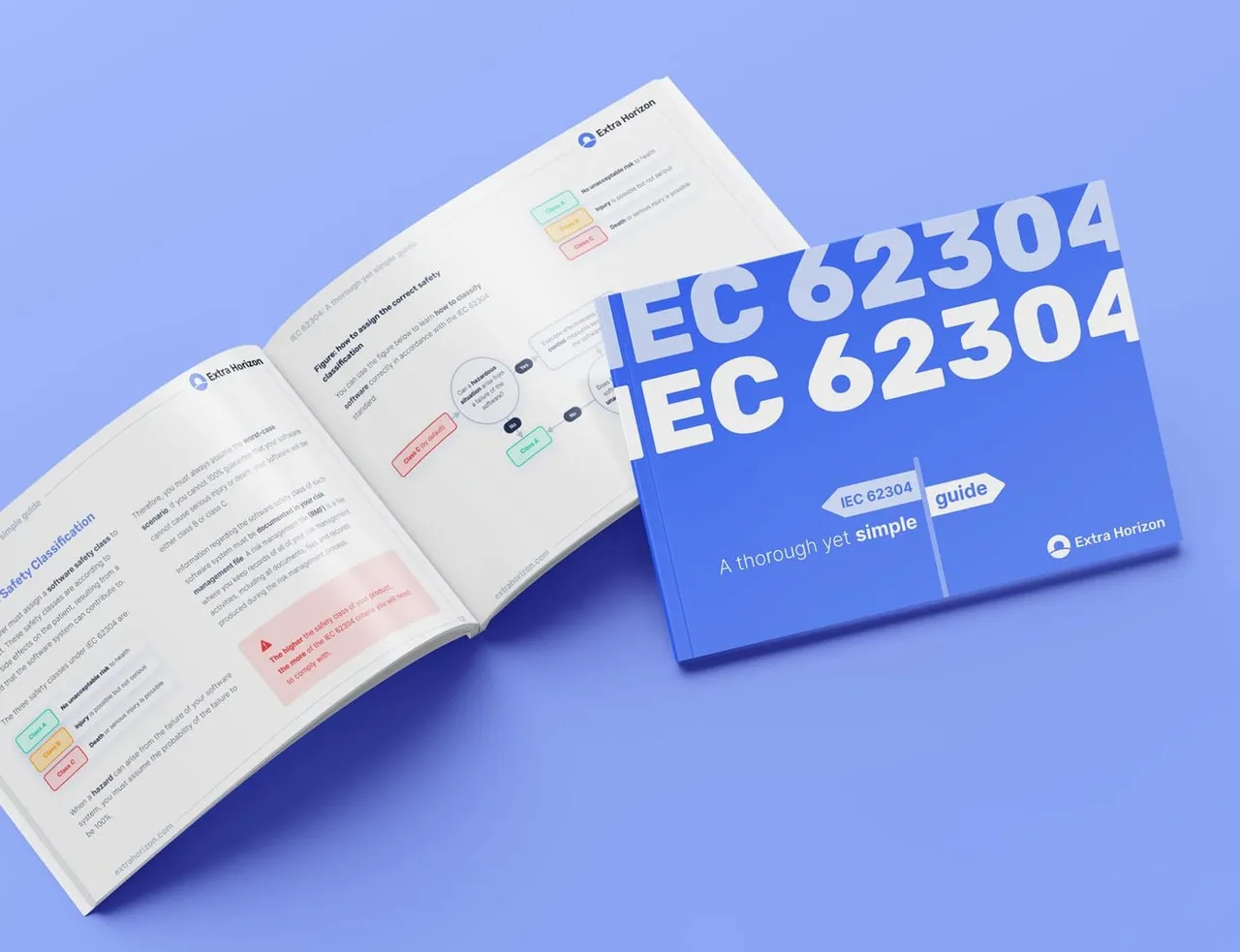
IEC 62304: A Thorough Yet Simple Guide
Everything you need to know about the IEC 62304 standard for medical device software development — explained in plain language.
Building and releasing medical device software is hard — very hard. At Extra Horizon we’ve had extensive experience successfully building, launching, and scaling MedTech products that are IEC 62304 compliant. We often get questions about the standard, as it is not the easiest to follow. There are many concepts and terms to familiarise yourself with, which can seem quite daunting.
That’s why we wrote an elaborate guide on IEC 62304 — with the main purpose of navigating you through the most important concepts of the standard, clearly and practically.
What’s inside
Understanding the standard
A clear breakdown of what IEC 62304 actually requires, stripped of the jargon. The standard defines the lifecycle requirements for medical device software — from planning and development through to maintenance and problem resolution.
Software safety classifications
IEC 62304 divides software into three safety classes based on the severity of harm a software failure could cause:
- Class A — no injury or damage to health is possible
- Class B — non-serious injury is possible
- Class C — death or serious injury is possible
Each class carries different development, testing, and documentation obligations. This guide walks you through how to classify your software and what each classification means in practice.
The software development lifecycle
How to structure your development process to satisfy IEC 62304, including:
- Software development planning — what to document before you write a line of code
- Software requirements — how to capture and trace functional and non-functional requirements
- Software architecture — documentation requirements for system and software design
- Unit implementation and verification — coding standards and unit testing obligations
- Software integration and testing — integration test strategies and regression requirements
- Software system testing — validation testing and acceptance criteria
- Software release — configuration management and release documentation
Problem resolution
How to handle software anomalies, bugs, and defects in a way that satisfies the standard — including the feedback loop from post-market surveillance back into your development process.
Practical implementation tips
Lessons from real-world IEC 62304 implementations, including common pitfalls to avoid and tools that simplify compliance without slowing down your engineering team.
Who is this ebook for?
This guide is written for software engineers, technical leads, product managers, and regulatory affairs professionals at medtech companies and digital health startups who are working toward — or maintaining — IEC 62304 compliance.
Download free eBook
Fill in the form and receive the eBook straight to your inbox.